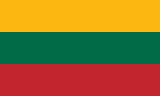
Lithuania – Facts, Capital & Geography | Random Country Generator
Capital
Vilnius
Population
2.8 Million (#137)
Currency
Euro (EUR)
Language
Lithuanian
Area
65,300 km²
National Dish
Cepelinai
National Flower
Rue
Density
43/km²
Internet TLD
.lt

Brief History
Lithuania established the Grand Duchy of Lithuania in the 13th century, becoming the largest state in Europe by the 15th century. It formed the Polish-Lithuanian Commonwealth in 1569, later annexed by the Russian Empire in 1795. Lithuania declared independence in 1918, but was occupied by the Soviet Union in 1940. It became the first Soviet republic to declare restored independence in 1990.
Key Demographics & Capital
Lithuania has a population of approximately 2.8 million, exhibiting high ethnic homogeneity with ethnic Lithuanians comprising over 84% of the population, followed by Polish (6.5%) and Russian (5%) minorities. Lithuanian, an ancient Baltic language, is the sole official language. Over 68% of the population resides in urban areas, primarily Vilnius.
Geography
Lithuania is the largest and most populous of the Baltic states. The landscape is predominantly flat with gentle hills, forests, rivers, and lakes. The Curonian Spit, a narrow sand dune peninsula shared with Russia, is a UNESCO World Heritage Site. The country has a short Baltic Sea coastline with the resort town of Palanga.
Culture & Tradition
Lithuanian culture has strong pagan roots, as the last European nation to Christianize. The Hill of Crosses near Šiauliai is a remarkable pilgrimage site. Basketball is the national passion — Lithuania consistently punches above its weight internationally. Traditional festivals celebrate solstices and equinoxes. Lithuanian cuisine features cepelinai (potato dumplings), šaltibarščiai (cold beet soup), and dark rye bread.
Economy
Lithuania has a dynamic, growing economy. Key sectors include lasers (Lithuania produces a significant share of world laser technology), IT, food processing, furniture, and chemicals. Vilnius has become a fintech hub. The country has attracted foreign investment in shared services and manufacturing.
Travel Highlights
Explore Vilnius' vast Old Town (UNESCO), visit the eerie Hill of Crosses, walk the Curonian Spit sand dunes (UNESCO), discover Trakai Island Castle, experience the bohemian Republic of Užupis in Vilnius, and explore the coastal resort of Palanga. Lithuania offers rich heritage with few crowds.
Fun Facts
Lithuania was the last European country to convert to Christianity (1387).
The geographical center of Europe is in Lithuania.
Vilnius has one of the largest Old Towns in Eastern Europe.
Lithuania had the largest empire in medieval Europe (Grand Duchy).
Basketball is practically a religion in Lithuania.
The Hill of Crosses has over 200,000 crosses.
Map
Bordering & Nearby Countries
Frequently Asked Questions (FAQs)
More from Europe
Want a surprise? Try our random Europe country generator or pick from the entire world.
Albania
Explore Albania: Europe's last hidden gem. Discover pristine beaches, ancient cities, and dramatic Albanian Alps.
Andorra
Explore Andorra: tiny mountain principality in the Pyrenees. Discover skiing, duty-free shopping, and Romanesque heritage.
Austria
Explore Austria: land of Mozart, Alpine peaks, and Viennese culture. Discover Salzburg, ski resorts, and Habsburg heritage.
Belarus
Explore Belarus: Europe's last primeval forest and medieval castles. Discover Belovezhskaya Pushcha, Mir Castle, and Slavic heritage.