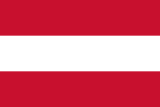
Austria – Facts, Capital & Geography | Random Country Generator
Capital
Vienna
Population
9.1 Million (#98)
Currency
Euro (EUR)
Language
German
Area
83,871 km²
National Dish
Wiener Schnitzel
National Flower
Edelweiss
Density
107/km²
Internet TLD
.at

Brief History
Austria emerged as a margraviate under the Babenberg dynasty in the 10th century, later passing to the Habsburg dynasty in 1278. The Habsburgs built a vast empire that dominated European politics for centuries, culminating in the Austro-Hungarian Empire. Following defeat in World War I, the empire dissolved, and Austria was annexed by Nazi Germany in 1938. It regained independence in 1955 under the State Treaty, committing to permanent neutrality.
Key Demographics & Capital
Austria has a population of approximately 9.1 million, with German serving as the official language alongside recognized minority languages like Croatian, Slovene, and Hungarian. Around 58% of the population is urbanized, with a significant concentration in the capital Vienna (nearly 2 million residents). The country has experienced steady immigration in recent decades, with significant communities of German, Turkish, Bosnian, and Syrian nationals.
Geography
Austria is a landlocked Alpine country in Central Europe. The Alps dominate the western and southern regions, covering about 62% of the country. The Danube River flows through the north, including Vienna. Eastern Austria features lowlands and the Pannonian Plain. The country has numerous mountain lakes and glaciers.
Culture & Tradition
Austrian culture is synonymous with classical music — Vienna was home to Mozart, Beethoven, Schubert, and Strauss. The Vienna State Opera, Salzburg Festival, and coffee house culture are iconic. Austrian cuisine includes Wiener Schnitzel, Sachertorte, and Apfelstrudel. The Habsburg legacy is visible in magnificent palaces and architecture.
Economy
Austria has a highly developed social market economy. Key sectors include industry (steel, machinery, vehicles), tourism (skiing, cultural tourism), services, and agriculture. Vienna is a hub for international organizations. The country has strong trade ties with Germany. Tourism in the Alps and cultural cities is a major economic driver.
Travel Highlights
Explore Vienna's imperial palaces (Schönbrunn, Hofburg), attend a concert at the Vienna State Opera, visit the Sound of Music locations in Salzburg, ski in world-class resorts like St. Anton and Kitzbühel, drive through the dramatic Grossglockner High Alpine Road, and discover the lakeside charm of Hallstatt (UNESCO). Austria offers culture and nature in perfect balance.
Fun Facts
Vienna is consistently ranked the world's most livable city.
Austria gave the world Mozart, Schubert, and Strauss.
The oldest zoo in the world is in Vienna (Schönbrunn, 1752).
Austria has 12 UNESCO World Heritage Sites.
The Sound of Music was filmed in and around Salzburg.
Austria's flag is one of the oldest national flags in the world.
Map
Bordering & Nearby Countries
Frequently Asked Questions (FAQs)
More from Europe
Want a surprise? Try our random Europe country generator or pick from the entire world.
Albania
Explore Albania: Europe's last hidden gem. Discover pristine beaches, ancient cities, and dramatic Albanian Alps.
Andorra
Explore Andorra: tiny mountain principality in the Pyrenees. Discover skiing, duty-free shopping, and Romanesque heritage.
Belarus
Explore Belarus: Europe's last primeval forest and medieval castles. Discover Belovezhskaya Pushcha, Mir Castle, and Slavic heritage.
Belgium
Explore Belgium: world-class chocolate, 1,500 beers, and medieval cities. Discover Brussels, Bruges, and Flemish artistic heritage.